
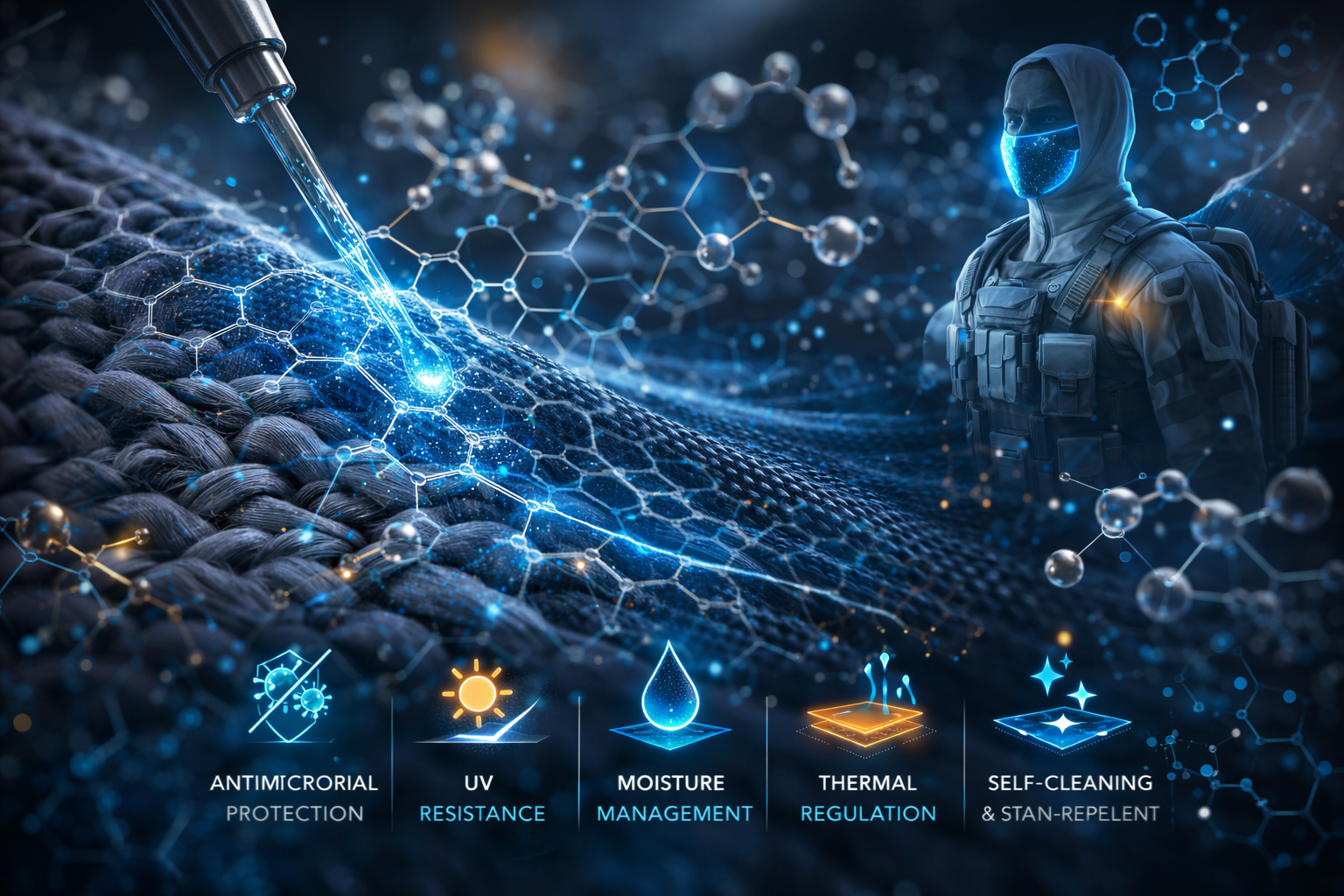
The Next Revolution in Textile Manufacturing
The textile industry is undergoing a profound transformation. For centuries, fabric innovation focused primarily on weaving techniques, fibre blends, and finishing treatments. Today, however, the next frontier of textile engineering exists at a scale invisible to the human eye.
Nanotechnology is redefining what fabrics can do.
At Global Incentives Manufacturing (GIM), a wholly owned subsidiary of Neyius Textiles, this emerging technology has already been integrated into advanced textile production, enabling fabrics to become smarter, more durable, and highly functional. By engineering materials at the nanoscale, textiles can now provide enhanced protection, performance, and longevity.
The result is not simply fabric manufacturing. It is fabric engineering.
What is Nanotechnology in Textiles?
Nanotechnology refers to the manipulation of materials at an extremely small scale, typically between 1 and 100 nanometres. At this scale, materials exhibit unique physical and chemical properties that can significantly enhance performance.
In textile manufacturing, nanotechnology allows engineers to modify fibres and fabrics by embedding nanoparticles or applying nano-coatings to create advanced functionality.
These enhancements allow fabrics to deliver properties such as:
Antimicrobial protection UV resistance Enhanced durability Moisture management Thermal regulation Self-cleaning capabilities
This technology transforms ordinary textiles into high-performance materials designed for modern applications.
Antimicrobial Fabrics: Protection at the Molecular Level
One of the most widely adopted applications of nanotechnology in textiles is antimicrobial protection.
By incorporating nanoparticles such as silver, zinc oxide, or copper, fabrics can actively prevent the growth of bacteria, fungi, and odour-causing microbes.
This innovation has significant implications for industries such as:
Healthcare uniforms and medical textiles Hospitality linens Sportswear and activewear Military and protective clothing
Antimicrobial fabrics help maintain hygiene, extend garment life, and reduce the need for harsh chemical cleaning agents.
UV Protection and Environmental Shielding
Nanotechnology also enhances fabrics with UV-blocking capabilities, providing protection against harmful ultraviolet radiation.
Nano-coatings and nanoparticles can be applied to textiles to create fabrics that:
Reflect or absorb UV rays Maintain protection even after repeated washing Improve comfort and safety in outdoor environments
This technology is particularly valuable for performance apparel, outdoor clothing, and workwear used in high-exposure environments.
Moisture Control and Breathability
Modern consumers and industries increasingly demand fabrics that regulate moisture effectively.
Nanotechnology enables textiles to be engineered with advanced moisture-management properties, allowing fabrics to:
Wick moisture away from the skin Improve airflow and breathability Maintain comfort in extreme conditions
These characteristics are especially important in sportswear, technical apparel, and high-performance uniforms.
Self-Cleaning and Stain-Repellent Textiles
One of the most exciting developments in nanotechnology is the creation of self-cleaning fabrics.
Inspired by the “lotus effect” found in nature, nano-engineered surfaces can repel water, oil, and dirt. This creates fabrics that naturally resist stains and contaminants.
Self-cleaning textiles offer several benefits:
Reduced washing frequency Lower water and energy consumption Extended product lifespan
These innovations are particularly valuable for hospitality, healthcare, transportation, and industrial environments where cleanliness and durability are critical.
Thermal Regulation and Comfort Engineering
Another breakthrough enabled by nanotechnology is advanced thermal regulation.
Nano-enhanced textiles can regulate body temperature by:
Retaining heat in colder conditions Improving cooling and airflow in warm environments Enhancing overall comfort and wearability
These fabrics are increasingly used in outdoor clothing, sportswear, military apparel, and specialised technical garments.
Global Incentives Manufacturing: Leading the Future of Smart Textiles
At Global Incentives Manufacturing (GIM), the integration of nanotechnology into textile production represents a strategic commitment to innovation.
By combining advanced materials science with modern manufacturing capabilities, GIM produces textiles designed to meet the evolving needs of global industries.
The company focuses on developing fabrics that offer:
Increased durability and longevity Advanced hygiene and antimicrobial protection Performance-driven moisture and temperature control UV and environmental protection Smart textile functionality
This approach positions GIM at the forefront of next-generation textile engineering.
The Future of Nanotechnology in Fabric Innovation
The potential of nanotechnology in textiles is only beginning to be realised.
Future developments may include:
Smart fabrics capable of monitoring health data Energy-generating textiles that power wearable devices Advanced protective materials for extreme environments Sustainable fabrics with improved environmental performance
As the textile industry continues to evolve, nanotechnology will play a crucial role in shaping the next generation of materials.
Engineering Textiles for the Future
Nanotechnology is transforming fabrics from simple materials into high-performance engineered systems.
By integrating nanoscale innovation into textile manufacturing, companies like Global Incentives Manufacturing are redefining what fabrics can achieve.
The future of textiles lies not only in design or fashion, but in science, engineering, and advanced material technology.
At GIM, the mission is clear:
We are not just weaving textiles. We are engineering the future of fabric.